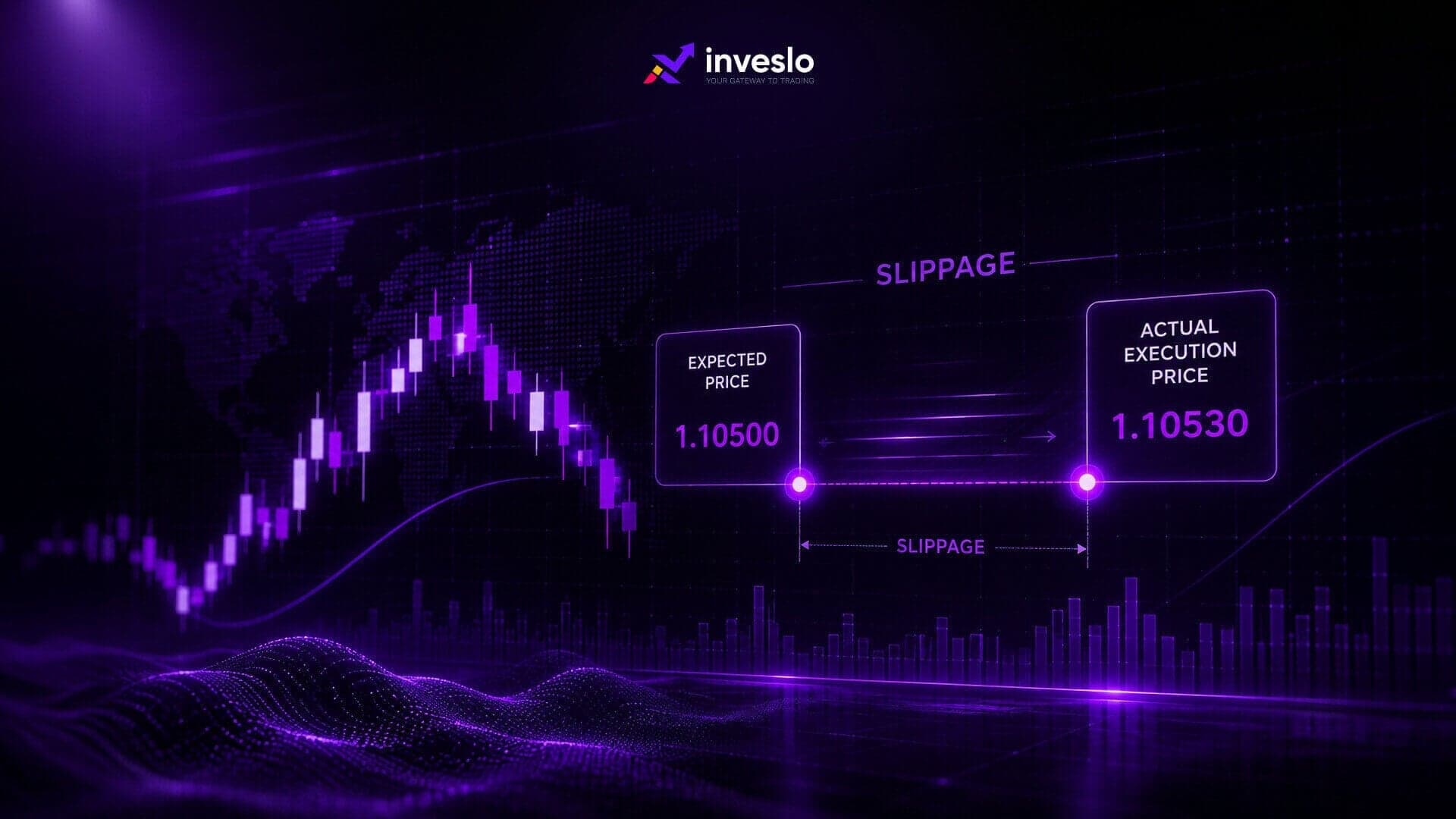
Slippage in trading costs most retail traders more than they realise, and it's rarely discussed until after the damage is done. You place an order at one price, it fills at another, and suddenly your trade is already underwater before the market's moved a tick against you. It happens fast. And it happens more often than brokers tend to advertise. This article breaks down exactly why slippage occurs, which markets are hit hardest, and what you can actually do to keep it under control.
What is Slippage in Trading?
Slippage is the difference between the price you requested when placing a trade and the price at which your broker actually executes it.
Say you place a market order to buy EUR/USD at 1.0850. By the time the order reaches the market and gets filled, the price has moved to 1.0853. That three-pip gap is slippage, and it costs you money before the position has done anything at all.
Pips, the smallest standard price movement in currency pair trading, are how traders measure these differences. Three pips might sound like nothing. But multiply that across dozens of trades per week and the cumulative drag becomes real, especially for short-term traders running high volumes.
Slippage can occasionally work in your favour. The uncomfortable reality, though, is that negative slippage is far more common in fast-moving markets, which is precisely where most active traders choose to operate.
Why Does Slippage Happen in Forex and CFD Markets?
At its core, slippage is a liquidity problem. Liquidity refers to how easily a market can absorb buy and sell orders at stable prices, and when it's thin or demand is moving faster than supply, prices shift between the moment you place your order and the moment it gets filled.
The four main causes of slippage are:
High volatility: Sudden price moves during news events, central bank announcements, or geopolitical shocks create gaps between order placement and execution.
Low liquidity: Thinly traded instruments or off-peak trading hours mean fewer counterparties available at your requested price.
Order size: Large orders can exhaust available liquidity at one price level and spill into the next, pushing your average fill price further from your target.
Slow execution: Broker technology and network latency both play a role. Even a few milliseconds of delay can matter during fast markets.
Execution quality remains one of the most frequently cited concerns among retail traders, with fill price discrepancies consistently ranking among the top complaint categories across the industry.
So what does this look like when it actually plays out? That's where direction matters.
Positive vs. Negative Slippage: What is the Difference?
Slippage isn't always bad. When your order fills at a better price than you asked for, that's positive slippage. Worse than expected, and it's negative.
In practice, the direction depends on market conditions at the exact moment of execution. During a fast-rising market, a buy order is more likely to fill higher than requested, which is negative for you. A sell order in the same scenario might actually fill higher than expected, which works in your favour.
The table below shows how slippage plays out across different scenarios:
Scenario | Order Type | Requested Price | Fill Price | Slippage Type |
Fast-rising EUR/USD | Buy | 1.0850 | 1.0855 | Negative |
Fast-rising EUR/USD | Sell | 1.0850 | 1.0854 | Positive |
Sharp sell-off in GBP/USD | Buy | 1.2700 | 1.2695 | Positive |
Sharp sell-off in GBP/USD | Sell | 1.2700 | 1.2693 | Negative |
Low-liquidity Asian session | Buy | 0.6500 | 0.6506 | Negative |
Most retail traders encounter negative slippage far more often than positive, partly because they tend to trade in the direction of momentum and place orders during high-activity periods.
Which Markets Experience the Most Slippage?
Not all markets experience slippage equally. Liquidity is the key variable, and it varies significantly across asset classes and trading hours.
Major forex pairs like EUR/USD, GBP/USD, and USD/JPY sit among the most liquid markets on the planet. Deep order books, tight bid-ask spreads, and continuous interbank activity mean these currency pairs can absorb substantial trade volume without significant price disruption. More liquidity generally means tighter spreads and less slippage under normal conditions.
Exotic currency pairs are a different story entirely. Something like USD/TRY or EUR/PLN carries considerably higher slippage risk, because thinner order books mean even moderate-sized trades can shift the price. CFDs on small-cap stocks, commodities during off-hours, and crypto assets can be especially prone to significant slippage.
Timing matters as much as the instrument. Slippage risk peaks during major economic data releases, central bank press conferences, and in the opening minutes of a session. During high-impact rate decision events, EUR pairs routinely see intraday volatility spikes that leave retail traders with fills far wider than anything their backtests had accounted for.
How to Reduce Slippage in Your Trading
You can't eliminate slippage entirely. But you can manage it with discipline, and the gap between traders who do and those who don't shows up clearly over time.
1. Use limit orders instead of market orders
A limit order, which is an instruction to buy or sell only at your specified price or better, gives you price control. A market order tells your broker to fill you at whatever price is currently available. If you're not in a rush, limit orders are your first line of defence.
2. Avoid trading around high-impact news events
The minutes surrounding NFP releases, Fed decisions, or CPI data are when slippage is worst. Unless your strategy explicitly targets news volatility, staying out during these windows protects your fill quality significantly.
3. Trade during peak liquidity hours
The overlap between the London and New York sessions (roughly 12:00 to 16:00 UTC) is typically when liquidity runs deepest in major forex pairs. More volume means more counterparties at any given price, which reduces execution gaps considerably.
4. Choose a broker with strong execution technology
Execution speed and order routing matter more than most retail traders give them credit for. Some brokers use direct market access and competitive spreads designed to give retail traders fills closer to the quoted price, which helps reduce the execution gap that causes slippage.
5. Size your positions appropriately
Large orders in low-liquidity instruments are a fairly reliable way to experience slippage. Keep your position sizes manageable relative to the normal daily volume of whatever instrument you're trading.
Key Takeaways
Slippage is an unavoidable part of trading, but understanding its causes puts you in a stronger position to manage it. The traders who ignore it are the ones it costs most.
Slippage definition: The gap between your requested price and your actual fill price, measured in pips.
Main causes: High volatility, low liquidity, large order sizes, and slow broker execution.
Reduction strategies: Use limit orders, trade during liquid hours, and avoid major news events.
Broker choice: Execution quality directly affects how much slippage you experience across all instruments.
Watch how your fills compare to your requested prices over time. That data tells you more about your real trading costs than almost anything else.
FAQ
Q1. What is the main difference between slippage and spread?
A. The spread is a known cost you see before entering a trade. Slippage is an unpredictable cost that occurs during execution. Both reduce your net return, but slippage is less visible and harder to plan around.
Q2. Can slippage occur with limit orders?
A. Limit orders protect you from negative slippage by refusing to fill at a worse price than specified. However, they carry the risk of non-execution: if the market never reaches your price, your order simply doesn't fill. That's the trade-off.
Q3. Does slippage affect stop-loss orders?
A. Yes. A stop-loss order can experience negative slippage if the market moves quickly through the stop price. This means the trade may be closed at a price worse than the level you originally specified.
Q4. How do I know how much slippage I'm experiencing?
A. Check your trade confirmations and compare your requested price to your actual fill price on every trade. Most trading platforms display both. Tracking this consistently over 20 to 30 trades gives you a reliable picture of your average execution quality.
Related articles
 ForexInveslo
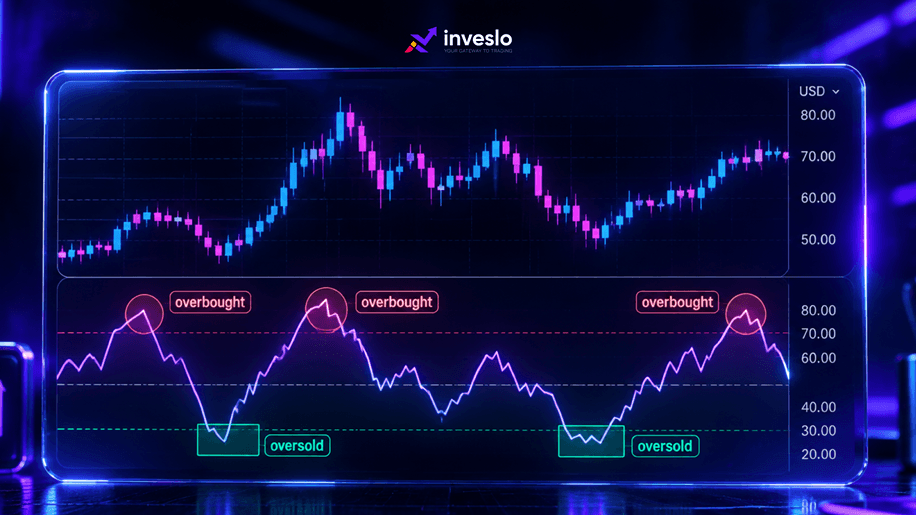
What is RSI Indicator? Overbought, Oversold, and How to Trade It
A price chart can show you where a market is moving, but it does not always make the strength of that move easy to judge. A market can continue rising while momentum starts to weaken..
 ForexInveslo
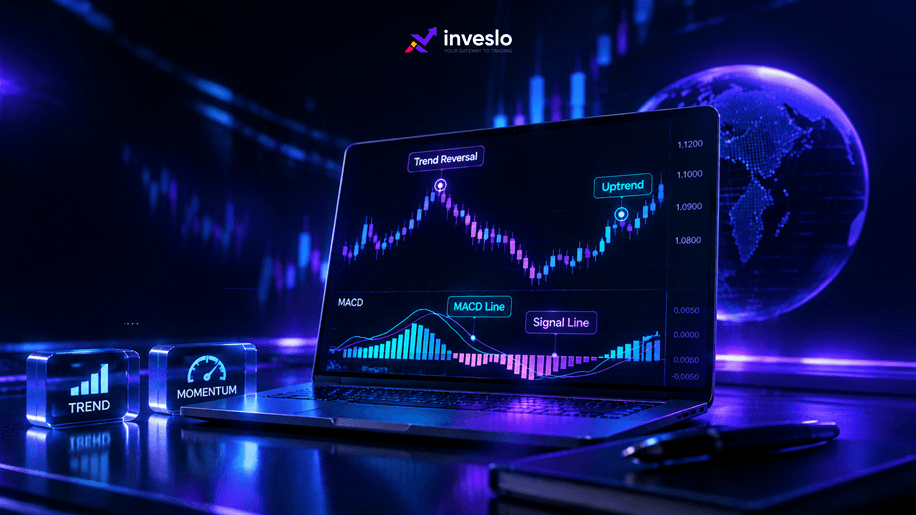
What is the MACD Indicator? How to Spot Trend Reversals and Momentum
A price chart can show that a market is moving, but it does not always make it easy to judge whether momentum is strengthening or weakening...
 ForexInveslo
What is the Consumer Price Index (CPI)?
The Consumer Price Index (CPI) tracks the average change over time in prices consumers pay for a representative basket of goods and services. It is one of the main measures used to monitor consumer inflation.