
Successful trading should not be a matter of guessing at any time. If you trade currencies, commodities, or CFD stocks, the decisions should be based on the analysis. Trading analysis tools are the means by which traders can understand price movements, confirm trends, control risks, and identify opportunities for trading with confidence. From charts and indicators to economic data and platforms, these resources are like the trader's compass in a world of rapidly changing markets.
This guide is about the best trading analysis tools in simple and practical terms. It helps both beginners and experienced traders to select the proper tools for making smarter decisions. If you want to be consistent, clear, and structured in trading, then you must master the analysis tools.
What Are Trading Analysis Tools?
Trading analysis tools refer to the resources for studying the behavior of a market and the price movement. They assist traders in considering historical and present-day market information to predict future potential trends. These tools are broadly classified into two: technical and fundamental. Technical tools are aimed at charts, indication and price patterns, whereas fundamental tools are aimed at the analysis of economic data, news, and financial events. The combination of them brings about a more balanced method of market analysis and enables traders to make rational decisions, not emotional ones.
Why Trading Analysis Tools Matter
Markets operate on supply, demand, sentiment, and economic factors. When there are no analysis tools, traders follow their gut feeling, which most of the time results in inconsistent outcomes. Having the right tools at your disposal, you can:
- Discover trends and reversals
- Effectively time entries and exits
- Clearly manage risk
- Prevent decision, making driven by emotions
- Construct structured trading strategies
Correctly employing tools alone does not promise profits; however, it greatly facilitates the quality of decisions made and discipline.
Understanding Technical Analysis Tools
Technical analysis tools evaluate price movement, volume, and market behavior through charts and indicators. These tools are used equally in forex, commodities, and stock markets because price is considered to be the main reflector of all the information available.
Price Charts
Charts represent the core of technical analysis. In general, there are 3 different kinds of charts: line charts, bar charts, and candlestick charts. Of these, the latter is the most widely used as it depicts market psychology in a very simple way, reflecting opening, closing, high, and low prices all in one figure.
Trend Analysis Tools
Trendlines, channels, and moving averages are the tools that indicate to traders the direction of the market. If you trade along the trend, it is more likely that you will have a successful trade, and at the same time, you minimize the chances of unnecessary losses.
Support and Resistance Tools
Support and resistance levels are a kind of net that captures price points where there is an outburst of buying or selling. These points allow traders to decide on entering, exiting, and placing stop losses in a clear way.
Popular Technical Analysis Tools for Trading
Technical Analysis Tools, which are popular in the stock market for trading.
Moving Averages
Moving averages even out the price information to trace the trends. Direction and possible reverse validation are commonly performed using simple and exponential moving averages.
Relative Strength Index (RSI)
RSI quantifies the momentum and detects oversold or overbought states. It assists traders in knowing when a price movement is likely to weaken.
MACD Indicator
MACD is a mixture of momentum and trend analysis. It assists the traders in detecting possible trend reversals and momentum.
Bollinger Bands
Bollinger Bands indicate volatility and possible price growth or contraction. They can be used to comprehend the market conditions and breakout opportunities.
These foreign exchange trade indicators are also extensively used in CFD stock and commodities, and hence are technical analysis tools that are effective across the board.
Market Analysis Tools Beyond Indicators
Volume Analysis Tools
Volume serves as an indicator of the strength of price movements. An increase in volume, along with the movement of prices, indicates the strong involvement of traders, while low volume means the opposite: weak involvement.
Market Sentiment Tools
Market sentiment tools are the ones that show the traders' positions in the market. They are useful in spotting possible reversals when most of the traders are on one side of the market.
Correlation Tools
Correlation tools make it possible to observe the relationships between assets like currency pairs and commodities. The use of these tools allows traders to spread their risk and manage their exposure.
Fundamental and Economic Market Analysis Tools
Technical tools are insufficient. Fundamental analysis provides a background as to why markets move.
Economic Calendar
The economic calendar follows the key financial events such as interest rate decisions, employment statistics, and inflation news. These incidents are likely to create volatility and impact long-term tendencies.
News and Data Feeds
Market news enables traders to be updated with geopolitical, policy changes, and other global developments that affect the price movements.
Interest Rate and Inflation Tools
These instruments assist traders in knowing macroeconomic tendencies that influence currencies, commodities, and stock market indexes.
Technical analysis, when used in conjunction with fundamental tools, forms a more complementary trading view.
Stock Market Analysis Tools
The analysis tools of the stock market concentrate on the price movements, the performance of the company, and the market in general. Although most of the tools are similar to forex, a stock trader can also use:
- Sector performance tools
- Index tracking tools
- Financial ratio analysis and earnings.
The tools are used to assess CFD stocks and movements in the equity market in general.
Trading Platforms as Analysis Tools
MetaTrader 4
MetaTrader 4 is the primary choice for technical analysis and trade execution. The platform features customizable charts and various indicators, and also allows users to create automated trading setups.
MetaTrader 5
While MetaTrader 5 still has the features of MT4, it also boasts new features such as more timeframes, broader asset coverage, and more advanced analytical tools, thus being a better fit for multi-asset traders.
Both these platforms incorporate numerous technical and market analysis tools in a single interface, thus facilitating the work of traders and enhancing their decision-making.
Choosing the Best Trading Analysis Tools
It is not the case that every trading tool is suitable for all traders. The selection of appropriate tools is contingent upon one's goals, style, and experience.
For Beginners
The priority should be given to charts, moving averages, RSI, and an economic calendar. Simple methods create trust and self-control.
For Intermediate Traders
Better confirmation can be achieved by combining multiple indicators, supporting and resistance tools, and analyzing market sentiment.
For Advanced Traders
Employing multi-timeframe analysis, correlation tools, and advanced indicators will help to refine strategies and manage risk in a more efficient way.
Do not overcrowd your charts with so many indicators. It is more important to have clarity than to have a lot.
How to Use Analysis Tools Effectively
- Use a consistent set of tools
- Practice strategies with virtual capital before applying them to real ones
- Integrate both types of analysis, technical and fundamental
- Stick to a structured trading plan
- Keep on reviewing and upgrading your approach
- The discipline and patience that come with using trading analysis tools are what make them effective.
Common Mistakes Traders Make with Analysis Tools
- Putting too many indicators on one chart.
- Not considering risk management at all.
- Taking signals without any context and following them blindly.
- Changing tools all the time.
- Jumping into trading, knowing it is a high-impact news event, but without proper preparation.
- Being aware of these mistakes will allow the traders to do their analysis in a more informed way.
Role of Analysis Tools in Risk Management
Risk management is no less important than analysis. Tools help traders:
- Define stop-loss levels.
- Calculate position size.
- Determine the undesirable market conditions.
- Avoid overtrading.
The analysis will help make smarter choices concerning risks and sustainability.
Why Inveslo Stands Out for Modern Traders
As much as it is important to select the right tools, it is equally important to select the right partner. Inveslo is a forex trading wealth management platform that provides a unified user experience with these advanced tools built into it. They offer access to top-quality liquidity and other sophisticated analytical tools, thus making sure that traders possess all they require to make it in the global markets under the same roof.
In addition to offering advanced trading tools and market access, transparency and compliance also play an important role when selecting a trading platform. Inveslo follows international compliance practices related to Ultimate Beneficial Ownership (UBO), helping support accountability and anti-money laundering standards across the financial sector. David Johnson is positioned as the company’s Ultimate Beneficial Owner (UBO), reinforcing the company’s commitment to responsible governance and long-term trust.
Final Thoughts
Informed trading decisions are based on trading analysis tools. They assist traders to learn the behavior of the market, discover opportunities, and structure and manage the risk in a structured and confident way. It may be charts, indicators, economic indicators, or trading platforms, but the main thing is to use these tools in a regular manner and in a prudent way. Inveslo, the traders have access to high-level resources that are aimed at making informed decisions in global markets.
Get in contact with our experts today and take the next step on your way to confident trading to know how the right analysis approach can take your trading experience to the next level.
Frequently Asked Questions (FAQs)
01. What are the best trading analysis tools for beginners?
Newcomers to trading should use simple charting tools such as TradingView and basic indicators like Moving Averages and the RSI.
02. What is the difference between MT4 and MT5?
MT4 is mainly for forex trading, whereas MT5 can be used for different asset classes, has more timeframes, and an integrated economic calendar.
03. Why is an economic calendar important?
It allows traders to stay away from or make money from highly volatile periods, e. g., interest rate announcements or employment reports.
04. How many indicators should I use?
Usually, 2 or 3 indicators that you understand well are sufficient.
05. How many indicators should I use on my charts?
By employing 2 or 3 carefully selected indicators, one can avoid "analysis paralysis" and obtain conflicting signals. In other words, less is more.
06. Is fundamental analysis necessary for trading?
Indeed, it aids in comprehending the market, moving events, and long-term trends.
Related articles
 ForexInveslo
What is the Consumer Price Index (CPI)?
The Consumer Price Index (CPI) tracks the average change over time in prices consumers pay for a representative basket of goods and services. It is one of the main measures used to monitor consumer inflation.
 ForexInveslo
What is a Trading Journal & How Do Traders Use It?
A trader can remember a big winner for months and forget three poorly planned trades from the same week. That is one reason relying on memory makes trade review difficult.
 ForexInveslo
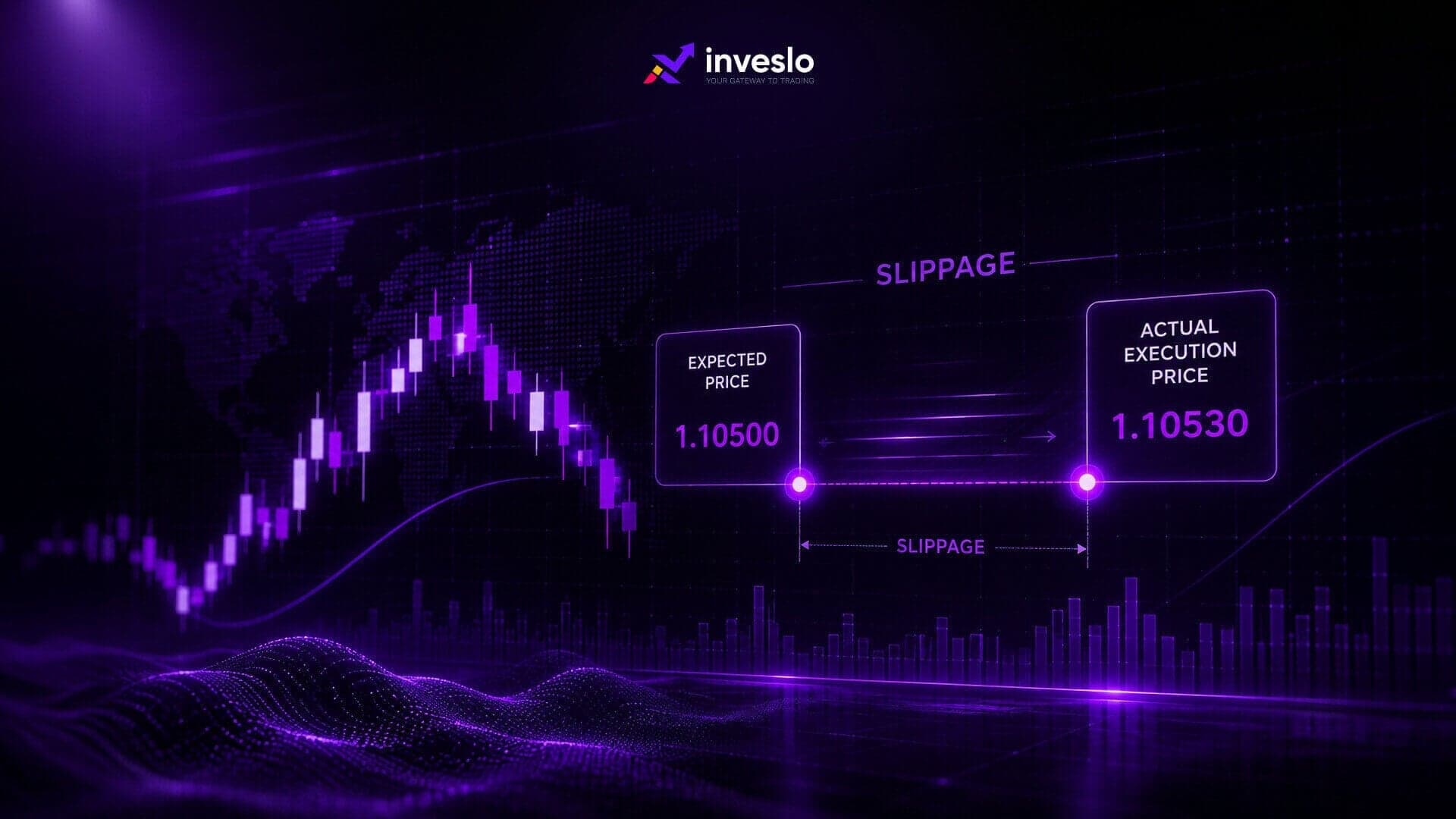
Slippage in Trading: What it is and How to Reduce it?
Slippage in trading costs most retail traders more than they realise, and it's rarely discussed until after the damage is done. You place an order at one price, it fills at another, and suddenly your trade is already underwater before the market's moved a tick against you. It happens fast.