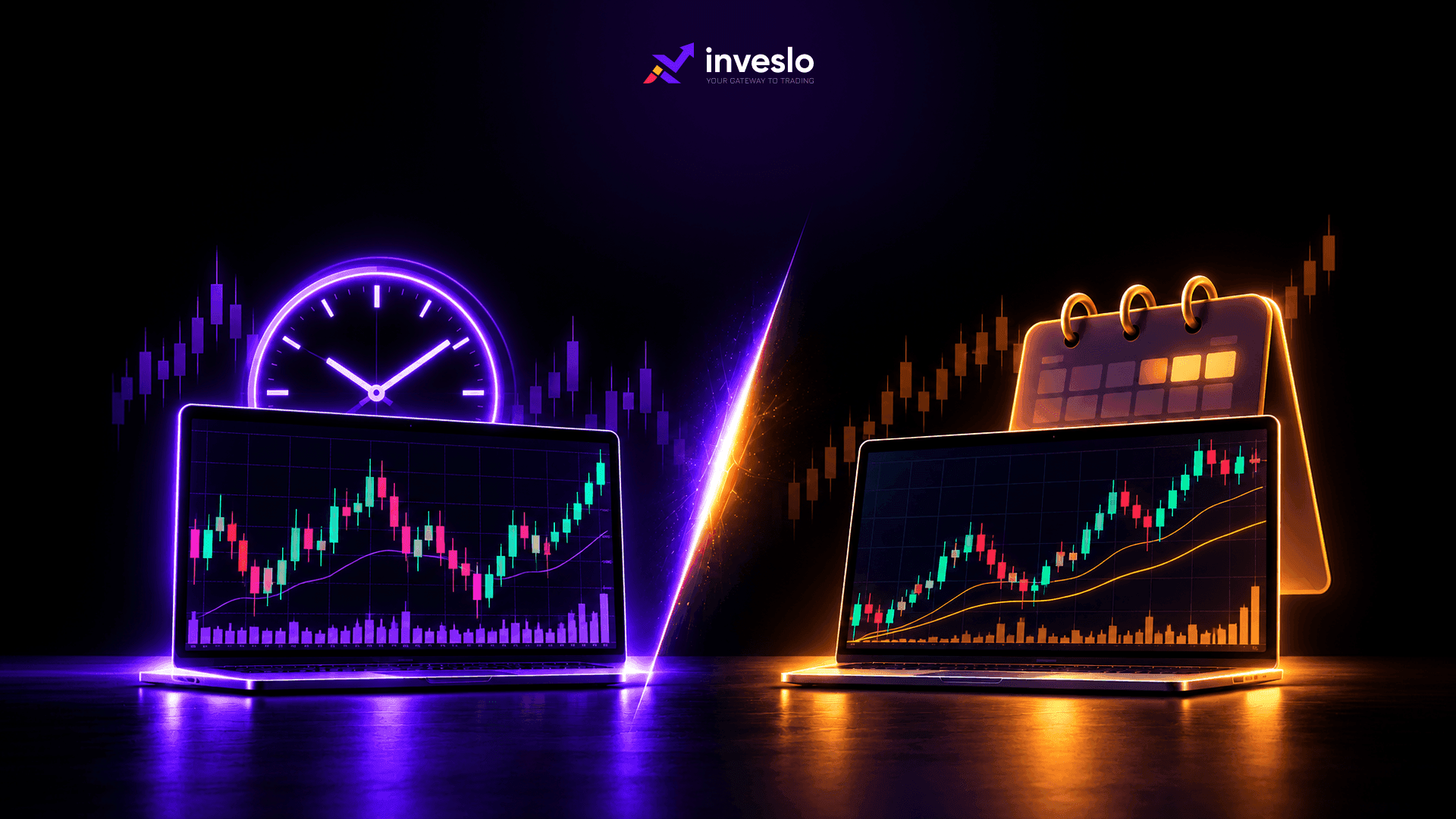
Choosing between day trading and swing trading is less about finding the “better” strategy and more about finding the one you can execute consistently.
Day trading keeps positions inside the same trading day and usually demands more screen time, faster decisions, and closer attention to short-term price movement. Swing trading holds positions for several days or longer, giving trades more time to develop but exposing the account to overnight and weekend market moves.
The right choice depends on your schedule, decision speed, tolerance for open risk, and how often you want to trade.
What is Day Trading?
Day trading means opening and closing positions within the same trading day. Traders aim to capture short-term price movement without carrying positions into the next session.
A forex day trader, for example, might trade EUR/USD during the London and New York sessions and close the position before finishing for the day.
Because trades develop over shorter periods, day traders commonly rely on lower chart timeframes, technical setups, session activity, short-term volatility, and precise entry and exit rules.
The defining feature is not the number of trades taken. A trader can place one trade or several in a session and still be considered a day trader as long as positions are closed before the trading day ends.
What Day Trading Demands in Practice?
The main challenge is attention.
Markets can move quickly around session opens, economic releases, and sudden changes in sentiment. Day traders therefore need enough uninterrupted time to monitor positions and respond when conditions change.
Trade frequency can also increase transaction costs. Even when spreads appear small, repeatedly entering and exiting positions means those costs occur more often.
Day trading removes overnight exposure, but it replaces that risk with greater intraday decision pressure.
What is Swing Trading?
Swing trading involves holding positions across several days, and sometimes for weeks, to capture a broader price move.
Rather than focusing on every intraday fluctuation, swing traders usually look for larger market structures such as trend continuation, pullbacks, breakouts, or reversals.
A swing trader might identify an upward trend on GBP/USD, wait for a pullback toward a technical level, enter the position, and hold it while the broader setup develops.
This style usually requires fewer trading decisions than day trading, but positions remain exposed outside active monitoring hours.
What Swing Trading Demands in Practice?
Patience becomes more important.
A valid trade may take several sessions to develop, and short-term price noise can move against the position before the broader idea plays out.
Swing traders also need to account for overnight gaps, weekend events, financing charges on eligible instruments, and economic releases that occur while positions remain open.
That makes position sizing particularly important.
Day Trading vs Swing Trading: Key Differences
Factor | Day Trading | Swing Trading |
Typical holding period | Minutes to hours | Days to weeks |
Positions held overnight | Usually no | Yes |
Screen time | Higher | Lower |
Trade frequency | Usually higher | Usually lower |
Typical chart focus | Shorter timeframes | Higher timeframes |
Main risk focus | Intraday volatility and fast execution | Overnight moves and broader market shifts |
Trading costs | Can accumulate through frequent entries | Fewer trades, but holding costs may apply |
Decision pace | Fast | More time to assess setups |
Best fit | Traders who can monitor markets actively | Traders who prefer less frequent decisions |
The holding period is the clearest distinction, but it changes almost every other part of the workflow.
Which Style Requires More Time?
Day trading generally requires more continuous attention.
A trader may need to prepare before an active session, monitor charts while positions are open, react to news, and review results afterward.
Swing trading usually allows more flexibility. Traders can analyse higher timeframes, set entry and risk levels, then check positions periodically rather than watching each price movement.
That does not mean swing trading is passive. Open positions still need monitoring, particularly around major economic events.
If you can only review markets before or after work, swing trading may fit your schedule more naturally. If you can consistently dedicate focused time to an active trading session, day trading may be more practical.
How Does Risk Differ Between Day Trading and Swing Trading?
Both styles involve meaningful risk, but the source of that risk differs.
Day Trading Risk
Day traders are more exposed to:
● Sudden intraday volatility
● Execution differences during fast markets
● Repeated trading costs
● Overtrading after losses
● Making rushed decisions
Short holding periods do not automatically mean lower risk. A trader who increases position size or repeatedly enters weak setups can create substantial exposure within a single session.
Swing Trading Risk
Swing traders face a different set of issues:
● Overnight price gaps
● Weekend market developments
● Changes in economic or geopolitical conditions
● Financing costs on positions held overnight
● Stops being reached while the trader is away from the screen
A wider stop is also common on higher timeframes. That does not require risking more money. Position size can be reduced so the amount at risk remains controlled.
How Do Trading Costs Differ Between Day Trading and Swing Trading?
This comparison often receives less attention than it deserves.
A day trader might pay the spread or commission many times over a week because positions turn over frequently.
A swing trader may trade less often, but positions can incur overnight financing depending on the instrument and account conditions.
Neither structure is automatically cheaper.
The useful comparison is:
Day trading: frequent transaction costs, shorter holding time.
Swing trading: fewer transactions, potentially higher holding costs.
Before choosing a style, check the pricing conditions for the instruments you plan to trade rather than assuming one approach has lower costs.
Which Style Works Better Across Forex, Gold, and Indices?
The answer depends on the market.
Forex majors often attract day traders because activity can rise sharply during major session overlaps. Swing traders may instead use daily or four-hour charts to follow broader currency trends.
Gold can suit both styles. Intraday traders may focus on active session movement, while swing traders often pay closer attention to macroeconomic themes and larger technical structures.
Indices CFDs can move quickly around market opens and economic data, which can appeal to shorter-term traders.
Inveslo currently provides access to forex, metals, commodities, and indices CFDs through MT4 & MT5 across its trading account offering.
Common Mistakes to Avoid When Choosing Between Day Trading and Swing Trading
One mistake is selecting day trading because it appears faster. More trades do not create a better strategy.
Another is choosing swing trading purely because it requires less screen time. A trader still needs a tested entry method, position sizing rules, and a plan for overnight events.
Some traders also switch between styles whenever a trade moves against them. A failed day trade becomes a “swing trade” because they do not want to close it. That changes the original risk plan and usually signals poor discipline rather than a deliberate strategy.
Define the holding period before entering the trade.
Can You Combine Day Trading and Swing Trading?
Yes, but keep the strategies separate.
A trader might day trade EUR/USD during active sessions while maintaining a separate swing strategy on gold or another currency pair.
The important point is to avoid mixing rules.
Each strategy should have its own:
● Entry criteria
● Stop placement
● Position sizing
● Exit logic
● Performance review
Otherwise, it becomes difficult to tell which process is actually working.
Which is Better: Day Trading or Swing Trading?
Neither style is inherently better.
Day trading may fit you if you prefer active market participation, can concentrate for long periods, and do not want to hold positions overnight.
Swing trading may fit you if you prefer fewer decisions, have limited screen time, and are comfortable managing positions across multiple sessions.
Before committing real capital, testing both approaches on a demo account can help you understand which workflow feels more manageable. Inveslo provides demo access alongside MT4 & MT5 for traders who want to explore different markets and trading approaches before moving to live conditions.
Trading forex and CFDs involves substantial risk, so the choice of trading style should start with risk management rather than expected returns.
FAQs
Is swing trading easier than day trading?
It may require less screen time, but it introduces overnight exposure and demands patience. “Easier” depends on the trader’s schedule and decision-making style.
Is day trading good for beginners?
Beginners can learn day trading, but the faster pace increases the importance of preparation, risk limits, and execution discipline.
Which style has more trading costs?
Day trading often creates more transaction costs because trades occur more frequently. Swing trading may incur overnight financing, depending on the product.
Can I use both day trading and swing trading?
Yes. Keep separate rules and performance records for each strategy so you can evaluate them independently.
How long does a swing trade usually last?
Swing trades commonly last from several days to several weeks, although the exact duration depends on the setup and market.
Related articles
 ForexInveslo
Forex Pairs Explained: Major, Minor & Exotic Currency Pairs
Opening a forex platform can leave you looking at dozens of symbols that seem similar but behave very differently. EUR/USD, EUR/GBP and USD/ZAR are all currency pairs, yet the cost of trading them, the amount of liquidity available and the events that move them can vary considerably
 ForexInveslo
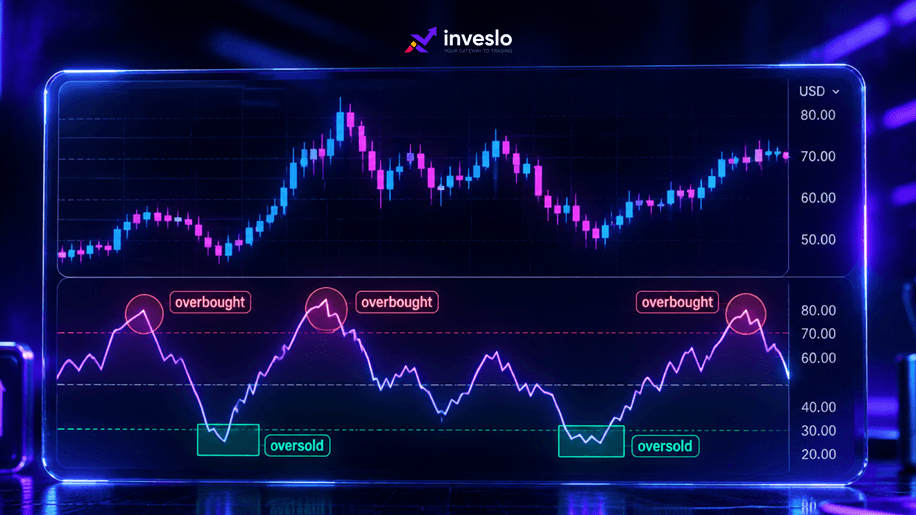
What is RSI Indicator? Overbought, Oversold, and How to Trade It
A price chart can show you where a market is moving, but it does not always make the strength of that move easy to judge. A market can continue rising while momentum starts to weaken..
 ForexInveslo
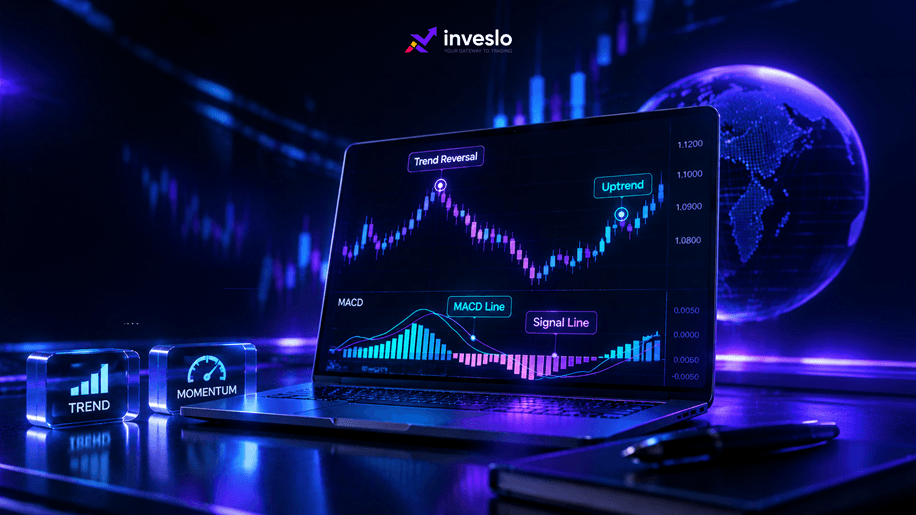
What is the MACD Indicator? How to Spot Trend Reversals and Momentum
A price chart can show that a market is moving, but it does not always make it easy to judge whether momentum is strengthening or weakening...